
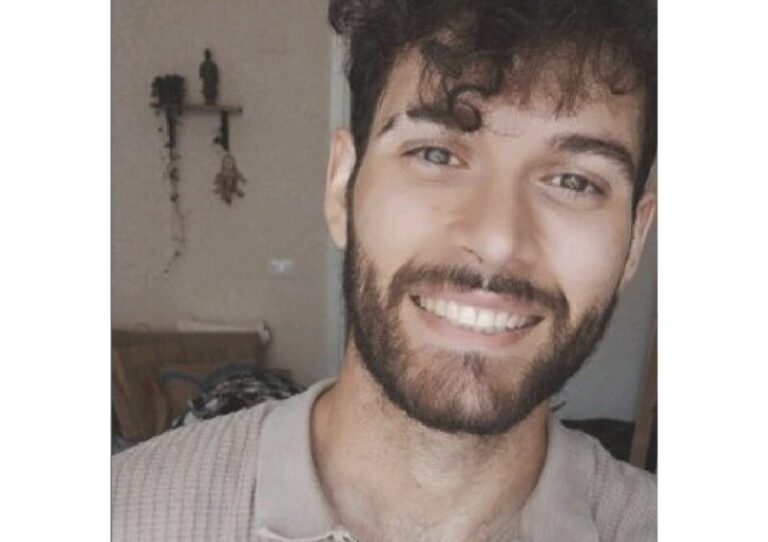
Film : Irene
Director : Valerio Pampaglini
Cinema often becomes a mirror for the deepest corners of the human soul. With his debut short film IRENE, director Valerio Pampaglini takes us into a hauntingly poetic world, a place where silence, broken reflections, and shadows confront the fragility of the human mind. IRENE tells the story of a woman trapped within herself, in an abandoned house of emptiness, where a song rekindles what once seemed lost.
We sat down with Valerio Pampaglini to talk about his inspirations, creative process, and what IRENE represents for him as a filmmaker.
About Film :
“Irene is trapped inside her own mind, barren and empty as an abandoned house. Among broken mirrors and figures dressed in black, a song awakens something that seemed lost by now.”
About Director :
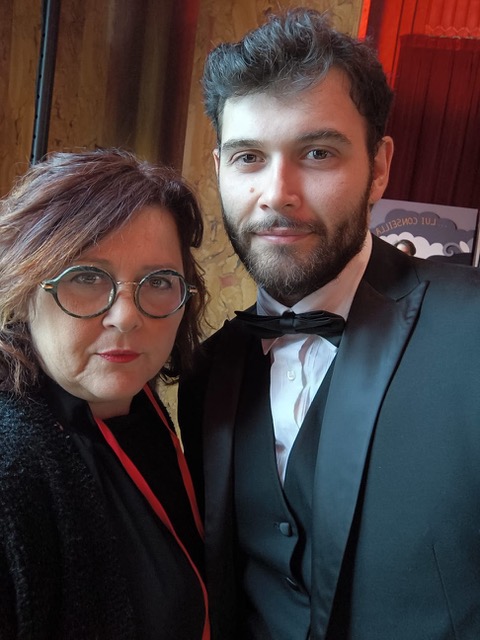
My name is Valerio Pampaglini and I was born in Umbria, in Todi. Since I was a child, I’ve always been fascinated by cinema and film in general. After high school, I spent the next three years studying film at La Sapienza University and two years at the Rome Film Academy, majoring in directing and screenwriting. After some practice at the academy, I wrote “Irene,” my first professional and official short film, which I also directed and produced.
The
Interview
Valerio Pampaglini, let’s start with the questions.
1. Valerio, congratulations on your debut professional short film. Can you tell us how the idea for IRENE first came to life?
IRENE was born roughly ten years ago, during my university years. Not much time had passed since my grandmother’s death, and the wound was still fresh, throbbing. Yet within me, the desire to pay tribute to her was so strong that it felt almost irresistible. At that time, however, I had no clear idea of the guiding thread, the element on which to build my story, or the precise point from which to begin. Everything changed while watching the Disney film Coco. Suddenly, a distant yet vivid memory resurfaced: amoment when my father played a song for my bedridden grandmother, a song she loved deeply. Holding a tablet in her hands, she watched attentively as Nilla Pizzi sang “Vola Colomba”, the iconic 1952 song that won the Sanremo Music Festival. That scene, which I had witnessed by chance, had lain hidden in my memory until that moment, ready to awaken with the force of a pure, uncontaminated emotion. Cinema, therefore, did more than merely awaken the memory: it also gave me the decisive push to bring this work to life. Today, I am convinced that my seemingly random presence in that theater was not mere luck, but an encounter with destiny. What I have created modest though it may be, realized with limited means is for me the most sincere and tangible proof of thatdestiny, a small tribute that keeps alive the memory of someone I loved.
2. The imagery of the barren house, broken mirrors, and dark figures is striking. What symbolism do these elements hold for you?
To tell a story and transform it into images, for me, means to overwhelm the viewer, to compel them to feel, to breathe, to live the emotion in its purest, rawest form. I want each scene not merely to be seen, but to be experienced: to evoke fear, wonder, joy, or pain, without filters, without compromise. Every image becomes a bridge between the visible and the invisible, between what is real and what inhabits memory and dream. In my short film, although it is not explicitly stated, my grandmother was trapped by severe dementia caused by Alzheimer’s disease. I chose to transpose this experience into a parallel world: unsettling, dark, and yet strangely poetic. The story unfolds inside a ruined house: cracked, bare, abandoned
rooms, where every object seems out of place, estranged from itself. It is my vision of my grandmother’s mind: empty, fragmented, full of cracks and shadows. On the walls hang dozens of mirrors. Some remain firmly nailed in place, others corroded and dirty, others shattered into a thousand pieces on the floor. The mirrors are memories: fragile, broken, suspended between past and present, reflections warped between what was and what remains. And then there are the hooded figures, haunting the space, destroying it, whispering to the protagonist as if they were ghosts. They are the disease made flesh: slow, relentless, seeping into Irene’s mind, distorting and erasing all she knows. Every image tells of decay, psychological violence, and the loss of self. It tells the pain of those trapped in a reality that slips away, that collapses from within. I chose to present powerful, disturbing images not for sensationalism, but to give voice to those who no longer can speak. Each visual fragment is an attempt to make the invisible tangible, to transform suffering into something real, palpable, almost sacred. It is a tribute, a silent cry that stretches across time and space, allowing the viewer, even for a fleeting moment, to enter the heart of someone who can no longer speak.
3. Music plays a pivotal role in the film, it awakens Irene from her state of emptiness. Why was music such an important narrative device for you?
As I have already emphasized, music has played an indispensable role in both the writing and the realization of this story. In particular, the first scene conceived for the short film shows the elderly Irene lying in bed with her son Franco, the tablet in her hands, and in that moment, music becomes the very soul of the scene. “Vola Colomba” was not a casual choice: it was deliberately chosen, passionately desired, and represents for me an emotional bridge between past and present, between memory and feeling. From a production standpoint, incorporating this piece was a true challenge: contacting and obtaining the rights was far from simple, yet every obstacle overcome made the final result all the more precious. When the song finally found its place in the film, it illuminated every frame of the childhood home, of the bedroom, giving body and breath to what the images alone could not convey. Every note accompanied the emotion, amplifying it, making tangible the connection between Irene, her past, and the viewer. For me, music is never merely an accompaniment: it is a tool that guides, envelops, and transports the audience into the scene. It does not only accompany the gaze, but penetrates the soul, making every gesture, every breath, every silence resonates. Music transforms vision into experience, the visible into concrete emotion, and this principle will forever remain central to my way of storytelling.
4. As a director making your first official short, what challenges did you face during the production of IRENE?
The first challenges I encountered were inevitably those related to costs and the overall financial aspect of the project. Even during the writing phase, I spent months searching for creative solutions and workarounds to include everything I had envisioned. One of the greatest challenges, as I have already mentioned, was acquiring “Vola Colomba”, while another significant obstacle was finding the right locations, particularly for the room of elderly Irene. Paradoxically, locating the ruined house proved less complicated, as it naturally fit into the surroundings of my hometown, Todi, between the Montenero Castle, owned by the Municipality, ands belonging to my family. I want to extend a heartfelt thanks to all my fellow townspeople, who offered their support in every possible way to help bring this small project to life. There were no digital special effects: every scene was physically built, assembled, and staged with care and dedication. The person who played the caregiver of elderly Irene also served as the official costume designer of the short film, creating and finishing every costume featured on screen. It was an extraordinary team effort, and the enthusiasm and participation surrounding the project was truly moving, especially from my family. I had more than fifty extras, and despite the effort required, everyone participated with joy, leaving with cherished memories of those moments. This short film is not just the result of my vision: it is the product of a collective effort, shared passion, and an extraordinary collaboration between friends, relatives, and fellow townspeople.
5. Your statement mentions how cinema has fascinated you since childhood. How did your time at La Sapienza and the Roma Film Academy shape your creative vision?
The two formative experiences were, for the most part, a confirmation of what I long felt deep inside: my path was in writing and directing, not acting. I believe it was during my university years that I truly understood, with an almost revelatory clarity, the direction I wanted my life to take. University showed me the way, but it was the academy that allowed me to solidify my place in the environment I had consciously chosen, providing me with the tools to grow and refine my artistic vision. I do not wish to attribute excessive institutional credit to these two places, yet I can state with absolute certainty that they were genuine treasure troves of extraordinary knowledge and unforgettable moments. Despite the challenges I faced and certain disappointments, particularly in the academic context, the memories I carry are rich and precious. The energy, passion, and enthusiasm of the people I encountered left an indelible mark: an emotional and intellectual legacy that continues to resonate within me, guiding my journey and inspiring me every time I face a blank page or a set to direct. Those years were not merely about training: they were a first taste of life, a mosaic of encounters, emotions, and discoveries that awakened in me a profound awareness of my role in the world of art and storytelling. It is an energy I carry in my heart, one that will continue to illuminate every step I take in the future.
6. Many filmmakers use their first films as deeply personal expressions. Does IRENE reflect any of your own inner struggles or artistic journey?
IRENE, in many ways, reflects both dimensions of my journey personal and artistic. On one hand, it is a deeply intimate expression, rooted in the memory of my grandmother; on the other, it embodies my creative approach, the way I choose to confront and shape a project. Within it lies an inner, dreamlike world, one that is not always used to tell purely personal experiences or inner struggles. The hooded figures, the ruined house these are vivid examples, symbols that transcend reality and give a visual form to emotions and thoughts otherwise invisible. For me, the mind must either be soothed or unsettled through elements that defy the ordinary, yet fully embody the essence of the situation one seeks to portray. I think of a film like Black Swan by Darren Aronofsky, where the character’s suffering is interwoven with dreamlike visions, represented to the viewer through vivid, shocking imagery that makes psychological tension and emotional intensity almost tangible. Creating IRENE was, above all, an act of exorcism: a way to release thoughts I had carried for years, a silent attempt to apologize to my grandmother for not being present enough in those final moments, and to atone through art for the absences and mistakes I inevitably made in my youth. It stands as memory, catharsis, and artistic reflection all at once: a bridge between the personal and the imaginary, between lived reality and the boundless interpretation of my creativity.
7. The visual tone of the film feels almost dreamlike, balancing between poetry and darkness. What cinematic influences inspired your style here?
The dreamlike world represents, for me, an essential thread, the invisible matrix running through every one of my works. This inclination stems from a deep passion for the fantastical and visionary universe of directors such as Steven Spielberg, Peter Jackson, Tim Burton, and Guillermo del Toro: filmmakers who have masterfully blended childlike imagination with visual power, opening doors to extraordinary worlds. From them, I drew inspiration, absorbing fragments of their artistry and fusing them with my own personal way of making cinema. Films like Jurassic Park, Mars Attacks!, Pan’s Labyrinth, or the majestic trilogy of The Lord of the Rings have represented far more than simple movies for me: they were formative experiences, monuments of collective imagination, capable of igniting the spark of dreams in entire generations of young people, urging them to dive into the world of cinema to live the unparalleled experience of creation. Watching those images, I too felt the call of an art that does not simply tell stories but builds universes. Alongside this fantastical universe, an equally decisive role has been played by the horror and thriller genres, which resonate deeply with my tastes and my way of storytelling. It was from this influence that the hooded figures were born unsettling, spectral presences that embody inner fears and tensions, projecting them back to the audience in the form of disturbing, powerful imagery. Within this interplay of dream, fantasy, and unease lies the essence of my visual poetics: a cinema that seeks both to enchant and to disturb, to inspire wonder while provoking discomfort, compelling the viewer to never remain indifferent.
8. What do you think is the most powerful message IRENE delivers about the human mind and resilience?
The message that IRENE seeks to convey, above all, is an invitation to live every single moment of life as if it were the happiest, the most precious. Do not waste even a second wrapped in negativity or sadness: time, in our existence, is the one thing that, once it slips away, can never be reclaimed. And it is precisely this awareness that should drive us not to surrender ourselves to the toxicity of the world, but instead to create luminous memories — to live them fully, to hold on to them, and to let them bring a smile whenever they resurface in our minds. At the same time, IRENE is also a work meant to raise awareness around senile dementia, in the case connected to Alzheimer’s disease. It is a tribute to those fragile souls who, little by little, lose their sense of self and retreat into a ruined world of their own where memories shatter like mirrors, resurfacing in fragmented, sometimes tender, sometimes violent flashes. And yet, despite the darkness of this subject, IRENE is not meant to be a clinical or purely explanatory short film. Its purpose is to offer hope, because those people, even when they appear absent are still there with us and with the right patience, with genuine love and stimulation, they can experience their condition with more serenity, with more clarity. The invitation is to remain patient, vigilant, present, because many of us, one day, could find ourselves in the same condition, and none of us would ever wish to be left alone — no more than what our body and mind will already have imposed upon us. IRENE, in this sense, becomes a call to life, to memory, and to empathy: a gentle yet urgent reminder never to forget the strength and fragility that coexist within the human spirit.
9. As this is just the beginning of your professional career, what do you hope IRENE will mean to audiences who watch it?
IRENE was the culmination of my academic journey and the beginning of what I hope will become my future livelihood offering my entire inner world to the art of filmmaking. In this short film, I poured every fragment of my soul, every spark of imagination, even within the limits imposed by the academy and by financial constraints boundaries that did not suffocate but rather fueled my determination to create. Out of these conditions was born a starting point that I hold dear, made even more meaningful by the recognition it received at your festival. My greatest hope is that the viewer, in watching IRENE, may have felt the same emotions that gave birth to it. I would like this small film to have touched the hearts even of those who, fortunately, have never faced such experiences, yet through the work may still perceive its universal breath. I do not seek lofty titles, nor do I expect it to be hailed as a masterpiece; I do not even know if I will ever have the fortune or ability to truly create one, but if, upon leaving the theater or turning off the screen of a computer or a phone, the viewer carries with them a thought, an emotion, a memory woven of melancholy and hope, then I will have reached my deepest goal. For me, IRENE is this: an act of love, a seed planted in the fertile soil of cinema, with the hope that one day it will grow into a flourishing tree, capable of offering shade, shelter, and emotion to anyone who encounters it along their path.
10. Finally, what’s next for you? Are you already working on your next project, or is this a moment to breathe and reflect?
At the moment, I am working on several projects in parallel: two screenplays. onehorror and one thriller, as well as a fantasy novel that I have been carrying with me for years, constantly growing, maturing, and transforming along with me. Each of these projects demands a great deal of energy and focus yet, I continue to pursue them with passion and determination. At the same time, I work part-time in a field completely unrelated to cinema, which inevitably slows down my creative process and yet, it never manages to extinguish the fire of my imagination, a flame that continues to burn brighter each day. I do not rule out the possibility of returning to IRENE in the future and reimagining it as a feature film, giving more space and depth to the themes and worlds that were only briefly sketched in the short. One of my greatest dreams a dream I hold dear is also to create a stop-motion animated film: an undertaking that, for now, seems distant and almost unattainable due to my commitments, but which remains alive in my heart, waiting for its time. What I wish for, above all, is to leave something meaningful with the audience: not through loud spectacle, but through authenticity, freshness, and above all, art. I would love for those who watch my work to leave the theater, or switch off their screens, carrying with them a thought, a memory, or a bittersweet smile something that lingers long after the credits roll. I would like to conclude by expressing my deepest gratitude for the warmth and generosity you have shown me in this wonderful interview. Your festival is a precious place, one that gives voice and space to those of us who try to share our inner worlds through cinema. I sincerely hope to return soon with another project to present to you and your audience, because festivals like yours are not just showcases they are true bridges between the dreams of filmmakers and the hearts of spectators. Valerio Pampaglini’s IRENE is more than a short film, it is an exploration of memory, emptiness, and the fragile sparks that can still awaken hope within silence. With his first professional work, Pampaglini shows us a bold cinematic voice that merges raw emotion with visual poetry. If IRENE is just the beginning, the journey ahead promises a director unafraid to venture into the shadows of the human soul.
Social page links and platforms:
LinkedIn: https://www.linkedin.com/in/valerio-pampaglini-25a015251?utm_source=share&utm_campaign=share_via&utm_content=profile&utm_medium=android_app
Contact us: [email protected]