
Film : TV Man
Director : Leonardo Valenti
In TV Man, director Leonardo Valenti brings audiences an offbeat, absurd, and hilariously surreal story of Marco, a young man preparing for a date with the girl of his dreams, until an unexpected visitor interrupts him. The visitor doesn’t knock on the door… he appears inside Marco’s television. With a peculiar request and a mysterious presence, the “TV Man” forces Marco into a strange, comedic, and increasingly unsettling journey where he must question everything he sees and everything he believes.
Is it hallucination… or reality? Valenti’s unmistakable storytelling style blends slapstick humor with psychological intrigue, creating a playful yet thought-provoking short that keeps viewers guessing while making them laugh.
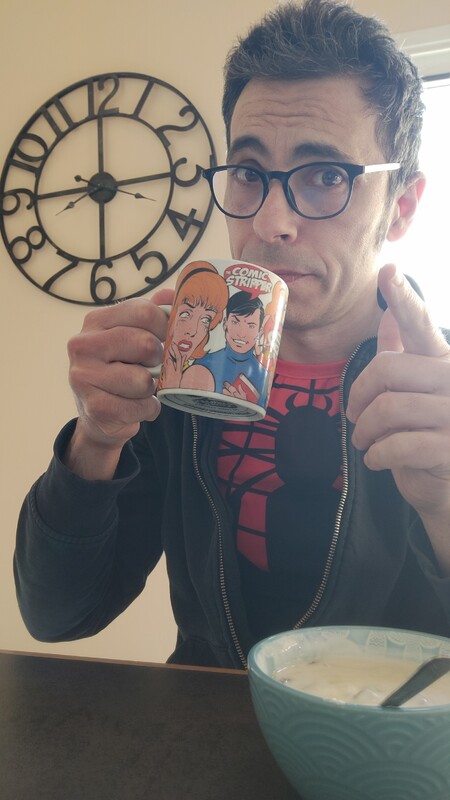
Known for his celebrated work in television, cinema, and comics, Leonardo Valenti brings decades of writing and story-editing experience to this fresh, energetic film. With acclaimed series like Romanzo Criminale – La Serie, RIS – Delitti Imperfetti, and Il Silenzio dell’Acqua, as well as celebrated feature films such as A.C.A.B., Valenti is a storyteller who thrives on character, tension, and originality.
TV Man reflects his signature flair mixing genre, tone, and imagination in a clever and unexpected way.
About Film :
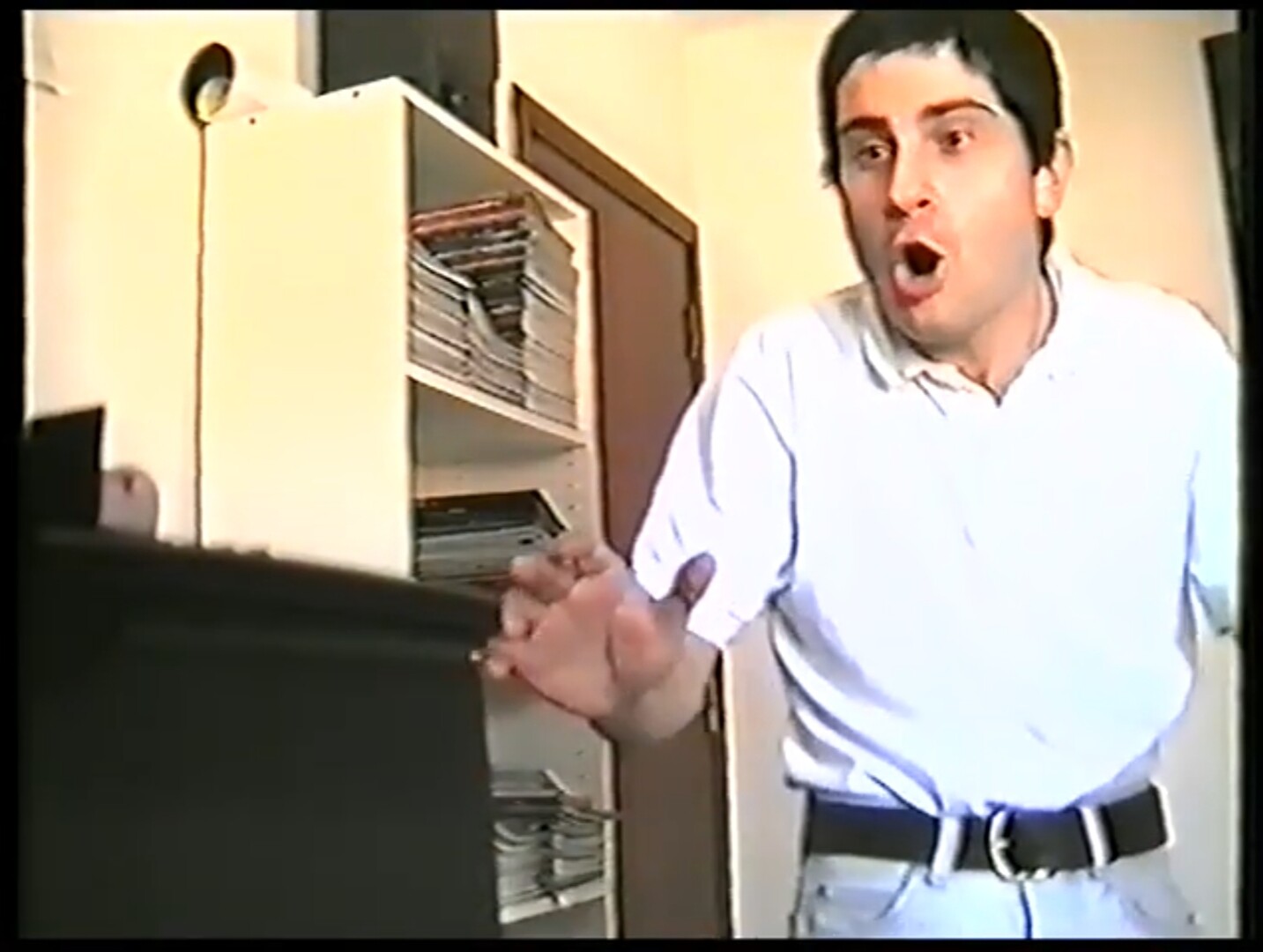
While getting ready for a date with the girl of his dreams, Marco is visited by a man on the TV who starts talking to him. And he has a request to make… Hallucination or reality? That’s what Marco will have to figure out in this absurd and slapstick comedy.
About Director :
Leonardo Valenti (b. 1975) is an Italian screenwriter and story editor for TV, film, and comics. He has worked on major Italian series such as Distretto di Polizia, RIS – Delitti Imperfetti, Romanzo Criminale – La Serie, and miniseries including Il Mostro di Firenze and Il Clan dei Camorristi. Recent projects include Il Silenzio dell’Acqua, La Voce Che Hai Dentro, Buongiorno, Mamma!, and the upcoming Alex Bravo.
In film, he co-wrote Mozzarella Stories and A.C.A.B. He has received awards including Best Screenwriter at Roma Fiction Fest (2011) and the CNC’s COCO-I Prize (2021, 2023).
Valenti also writes novels and graphic novels and works as a teacher and consultant, with experience at Le Groupe Ouest and on the Swiss series Helvetica. Since 2020, he has taught screenwriting at the Scuola Internazionale di Comics in Rome. He has lived in Brittany since 2012.
The
Interview
Leonardo Valenti, let’s start with the questions.
1. TV Man begins with an everyday moment that quickly turns surreal. What inspired this wildly imaginative premise of a man appearing inside a television?
It really started from two very simple obsessions I had in 1997: the terror of an ordinary first date and the strange power of television. I loved the idea that you think you control the TV with a remote, but in reality the images on screen control your mood, your desires, even how you see yourself. At the same time, there was that late-90s fantasy of “getting on TV” at all costs, of jumping from being a spectator to being inside the image.So the premise became: what if there really was a guy living inside your CRT, whose job is to “make the TV work,” and on the most important evening of your life he decides he wants to trade places with you? The whole film is basically that swap pushed to its absurd and slightly cruel consequences.
2. The film balances absurd comedy with elements of psychological mystery. How did you find the right tone between humor and uncertainty?
For me the key was to start from something painfully relatable: a guy who’s overexcited for a date, hates his clothes, panics, calls his friend, takes pills for his anxiety… nothing supernatural, just everyday neurosis. Into that fragile state I dropped an impossible event: a man talking from the TV. From there I tried never to “underline” the joke too much; the situations are absurd, but Marco reacts as if he were in a real breakdown. Visually I kept it very simple – locked-off shots, almost no tricks – so that the comedy comes from timing and the mystery from not explaining too much. You’re laughing, but at the same time you’re wondering: is this a hallucination, a ghost, or something even stranger?
3. The “TV Man” character is both hilarious and unsettling. How did you develop his personality and narrative purpose?
TV Man was born as a kind of trickster: part con artist, part game-show host, part demon. He’s funny because he’s chatty, mocking, almost friendly – but every “favor” he asks hides a trap. Narratively, he’s the embodiment of temptation: the temptation to escape your own life, your own body, your own insecurities, by jumping into another role, another image.
I also liked the idea that he might be a projection of Marco’s fears and desires, but the film never settles the question. As soon as he steps out of the TV he becomes almost more “real” than Marco himself, and that’s the disturbing part: the image ends up stealing the place of the person.
ay of storytelling.
4. As a writer with a long career in television and comics, how did your writing background influence your directorial choices in TV Man?
When I shot TV Man I was at the beginning of my path, but the habits that later defined my work were already there: I think in beats, in clear blocks of action, like pages of a comic or scenes of a TV episode. The script was basically a sequence of “comic set-pieces” escalating the same central game: man vs TV Man, reality vs screen.
That led me to direct in a very economical way – few characters, few locations, a lot of dialogue and rhythm. My love for comics pushed me toward very readable compositions: the 4:3 frame becomes like a panel where you always know who’s doing what and where the gag will explode. Even the linear editing on two VCRs forced me to “write with the scissors,” in a way that later helped me a lot in television.
5. What were the biggest creative challenges you faced while bringing such a surreal idea to life on screen?
The big challenge was: how do you make a body-swap with no digital effects, one S-VHS camera and two video recorders? The answer was to lean on suggestion rather than spectacle – cuts, framing, actor positions, and a few in-camera tricks to sell the idea that the two characters have exchanged places. Another challenge was keeping a single apartment visually alive for almost the whole running time: I had to think like a theatre director, changing the “stage” with blocking and angles instead of sets. And finally, working with a young, semi-amateur cast meant finding a style that embraced their spontaneity instead of hiding it. The surreal premise only works if the human reactions stay honest.
6. The story unfolds almost like a stage play in a confined space. Was this intentional, and how did it influence your direction and cinematography?
It was half necessity, half choice. With our budget, a handful of locations was already a miracle, so I decided to treat the apartment as a kind of little theatre: a limited space where everything happens in almost real time. That pushed me toward longer takes, front-facing compositions, and very clear entrances and exits – like characters walking on and off stage. The TV itself becomes a second miniature stage inside the frame, a little proscenium where TV Man performs. Because we had so few cover shots, I focused on clarity of action and rhythm; each cut has to mean something, otherwise you feel the “editing on two VCRs” too much.
7. How did you guide the actors to balance the comedic absurdity with emotional believability?
I always start from actions, not speeches: what does the character want in this moment, and what concrete thing are they doing to get it? With Marco, I asked the actor to play it as a genuine panic attack about his date and his self-image, never as a sketch. With TV Man, on the other hand, we looked for a cheerful cruelty – someone who enjoys the show, even when he’s destroying Marco’s life. On set I worked a lot on rhythm, entrances/exits, pauses; then I left room for small improvisations that made the scenes feel more alive without breaking the emotional truth.
8. Are there any filmmakers, genres, or works that influenced the mood or structure of TV Man?
In terms of spirit, the “holy trinity” of my VHS youth is Kevin Smith, Richard Linklater and Robert Rodriguez – that whole 90s indie wave that said: pick up a camera, tell your story, don’t wait for permission. For the comedy and staging, I’ve always looked up to Jacques Tati and Buster Keaton, who turn space and physical movement into jokes. And then there’s a clear love for genre hybrids: a touch of Twilight Zone, a bit of Italian absurd comedy, a sprinkle of slapstick. TV Man sits somewhere between those worlds: a lo-fi high concept treated with the lightness of a farce.
9. How does directing differ from writing for you? Did the process change your perspective on storytelling?
Writing is solitary and controlled: you can adjust, rewrite, move scenes around endlessly. Directing is the opposite – it’s dealing with bodies, time, accidents, limitations, and transforming all of that into the film. TV Man taught me very early that a scene isn’t just what’s on the page: it’s how an actor breathes before a line, how long a silence lasts, what you don’t show because you don’t have the means. After that experience, even in my later TV work, I started writing with the set in mind: thinking about budget, spaces, camera positions, and leaving “air” where actors and directors can play. It made me more pragmatic, but also more attentive to rhythm and to the audience’s expectations.
10. What do you hope viewers remember the most after watching TV Man?
I’d love for them to remember the feeling more than any single gag: the sense that a very small, homemade film can still surprise you, make you smile, and maybe disturb you a little. If they walk away thinking, “With a few friends, an old camera and a crazy idea, I could do something too,” then TV Man has done its job. And if, the next time they look at a screen, they briefly wonder who is really holding the remote – them or the image – that’s a nice bonus.
Contact us: [email protected]